Two children, two individuals: how Nido supports twins in early learning
07 Sep 2026Last year, Nido Early School Brabham welcomed six sets of twins. Its Executive Service Manager, Rachel, is also a twin mum, giving her a valuable perspective as both a parent and an early childhood leader.
Six sets of twins. Twelve individual children. And one early school leader who understands the daily realities firsthand.
Last year, Nido Early School Brabham welcomed six sets of twins. Its Executive Service Manager, Rachel, is also a twin mum, giving her a valuable perspective as both a parent and an early childhood leader.
Drawing on the practical support her team provides, as well as her own experience deciding whether her boys should spend time together or apart, Rachel understands the questions families may have.
Her experience is one example of how Nido teams across more than 80 early schools support families with twins. At Nido, we believe every child is a curious and capable learner with many ways of expressing and being understood. For twins, that means valuing the close connection they may share while ensuring each child’s voice, interests, strengths and individual learning journey help shape their day.

Originally from Nottingham in the UK, Rachel worked as a qualified chef for ten years before discovering her passion for early childhood education and care. She joined Nido as Curriculum Leader when her boys were eight months old and is now an Executive Service Manager.
With no family in Australia, Rachel says Nido Brabham became her family’s “home away from home”.
Sometimes the smallest help makes the biggest difference
Two young children, bags and backpacks, doors and gates, but only two hands.
At Nido, families can call ahead if they need help at arrival. A member of the team will meet them in the car park and assist with the children and their belongings. The same support is available at collection.
Members of the Brabham team will also step in when they see a parent who needs an extra pair of hands. It might mean carrying a backpack, holding a child’s hand or helping everyone get through the gate.
“A little goes a long way,” Rachel says.
For her, it is a simple example of knowing a family well enough to understand what could make their day a little easier.
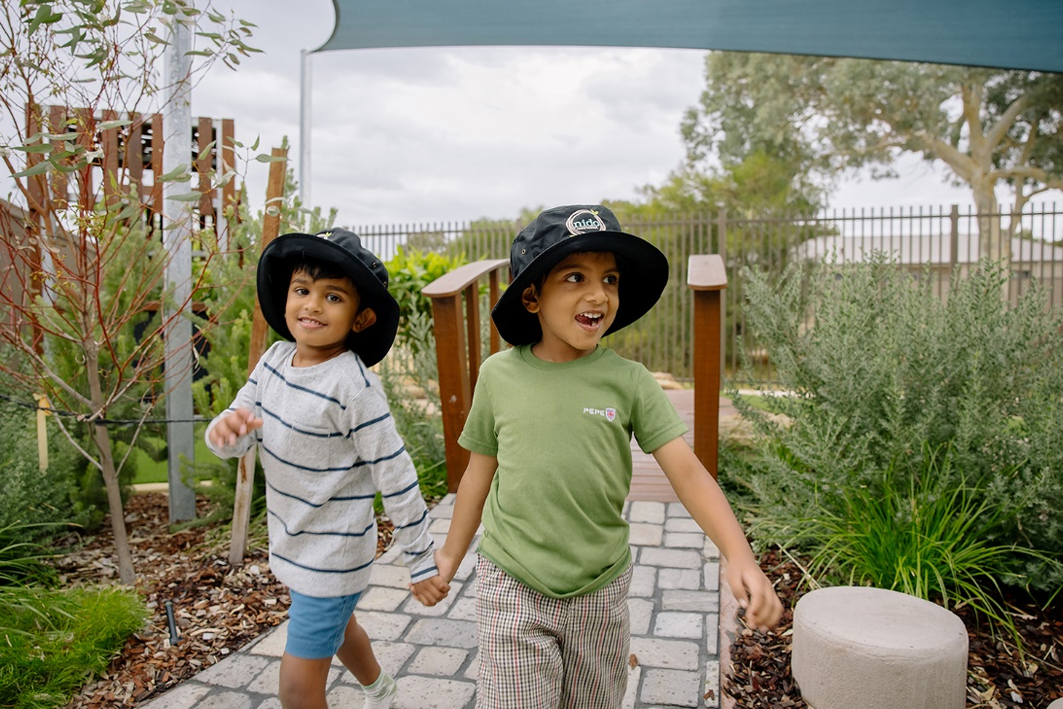
Two children, not simply “the twins”
One of the clearest signs that educators genuinely know twins is that they confidently use each child’s name, can tell them apart and share a separate handover about their day.
As a parent, Rachel valued hearing what each of her boys had enjoyed, how they had eaten and slept, and what they had experienced during the day.
Across Nido, educators plan and document learning for each child as an individual, guided by their interests, strengths and development.
At Nido Brabham, this individual focus can be seen in the everyday details. Each child has their own locker with their name and photograph, their own learning stories and an individual planning cycle. Even when twins share a birthday, each child takes part in their own Nido birthday ritual.
This individual focus is particularly important when children reach milestones at different times.
“Something that always helped me was using the other child as encouragement, not competition,” Rachel says. “Children develop and grow at their own pace.”

Together, apart or a little of both?
There is no single answer to whether twins should remain together throughout the day or spend some time apart.
Rachel wanted her boys to attend Nido on the same days. She took comfort in knowing they had each other if they needed reassurance, while they could also form their own friendships and play, eat and rest separately.
Other families at Nido have made different choices. One arranged separate attendance days for their twins, with one shared day each week. Another wanted their children to remain together as much as possible, including resting beside each other.
These examples reflect Nido’s individualised learning approach. Educators work closely with families and listen to each child, supporting both the sibling connection and opportunities for children to follow their individual interests and build other relationships.
Attendance patterns may also be shaped by work and family commitments. It is not always about what a family would ideally like to do, but what they need to do to make family life work.
Rachel wanted to know everything
When Rachel was choosing early learning, she wanted to know absolutely everything, and she means everything.
She had a notepad full of questions and made sure she understood every detail. Who would care for her boys? What would their days look like? How would they be recognised as individuals?
Rachel recommends asking about the consistency of the educator team, orientation opportunities and how each child’s routines and learning will be shared. Parents can also ask whether their children can spend time together or separately and how their individual interests will be recognised.
Most importantly, families should look for an early school where they feel heard and can build genuine relationships.

Finding your village
Rachel’s three pieces of advice for families beginning early learning? “Oh, just three?”
First, choose an early school that feels right for your children and family. You need people you trust, a safe environment and educators who will know each child as an individual.
Second, build relationships with the early school leaders, educators and other parents. Open and honest communication goes a long way. When children see their parents building relationships with their educators, it can help them form those connections too.
Finally, don’t be so hard on yourself. Parenting multiples brings new milestones, sleepless nights, regressions and sibling disagreements. Parents are learning alongside their children.
Rachel says her biggest learning was discovering that her boys could learn, play and build relationships without her and without always being beside each other.
“Entrusting other people to care for my boys was one of the hardest things I had to do, but also one of the best,” she says.
“You need a village. For our family, that village was Nido.”